
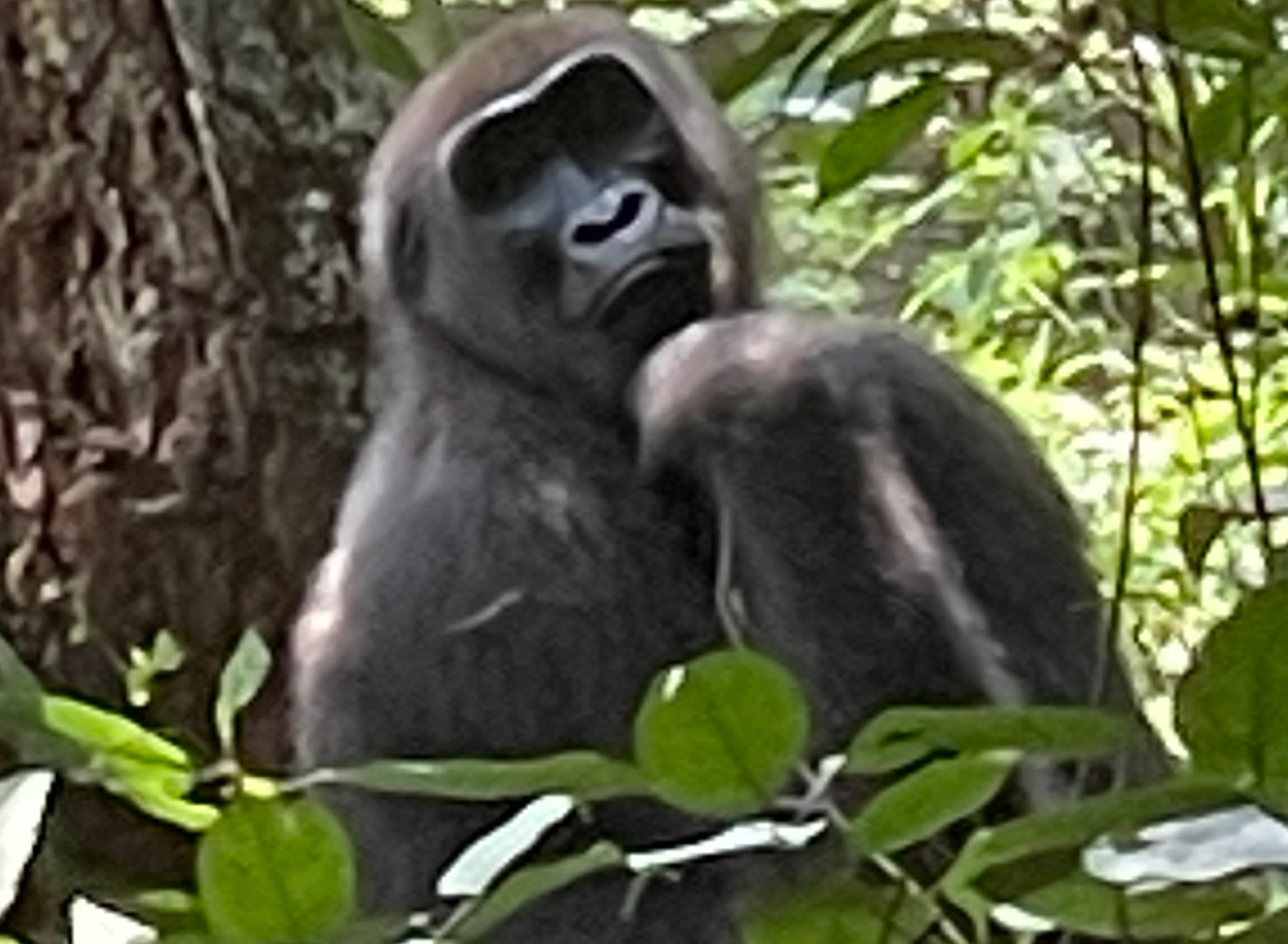
Gorillas can be found in ten African countries. There are Eastern Gorillas which include both Mountain Gorillas and Grauer’s Gorillas which can be found in Rwanda, Uganda, and the Democratic Republic of Congo. On the other hand, the Western Gorillas can be found in Gabon, Nigeria, Cameroon, Equatorial Guinea, Central African Republic, Angola and Democratic Republic of Congo.
Despite their existence in three countries, the area inhabited by the Eastern Gorillas is very small. The most common destination for viewing is Rwanda and tourism has exploded in the last several years. Daily permits in Rwanda are currently around $1500 USD. My husband and I were blessed to see them many moons ago when it was much less common.
Gabon is one of the wealthiest and most stable countries in Africa. Rain forest covers more than 80% of Gabon and it is the second largest in the world after the Amazon. In 2002 the President set aside over 10% of Gabon as protected national parks and Gabon was dubbed the last “Eden.” But infrastructure is still difficult and eco-tourism is still in its nascent stages. The cost of permits in Gabon are a 1/3 of Rwanda.
Some thoughts if deciding where to go –
The infrastructure and travel within Rwanda is much easier than Gabon. Travel to and within Gabon was difficult. That said, that was part of the draw. You definitely feel off the grid, don’t have to deal with any crowds and meet a different type of travelers.
Permits and lodges within Gabon are much cheaper than Rwanda.
While both offer wonderful viewing opportunities, the Eastern Gorillas live in more open spaces and you can see them better.
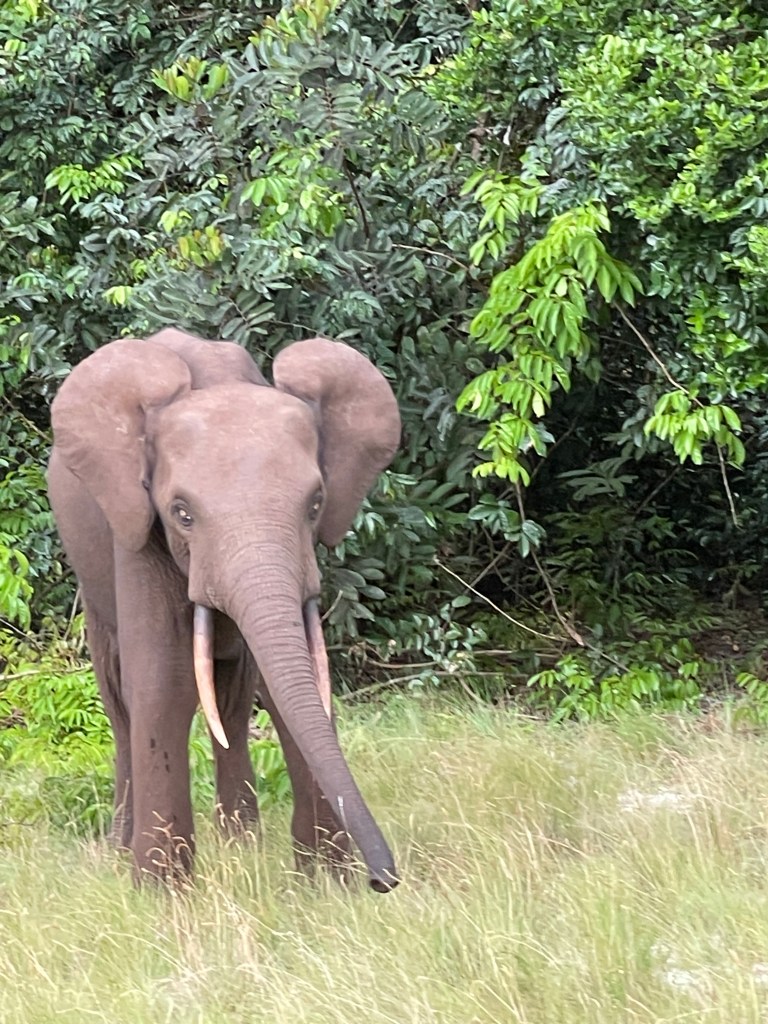
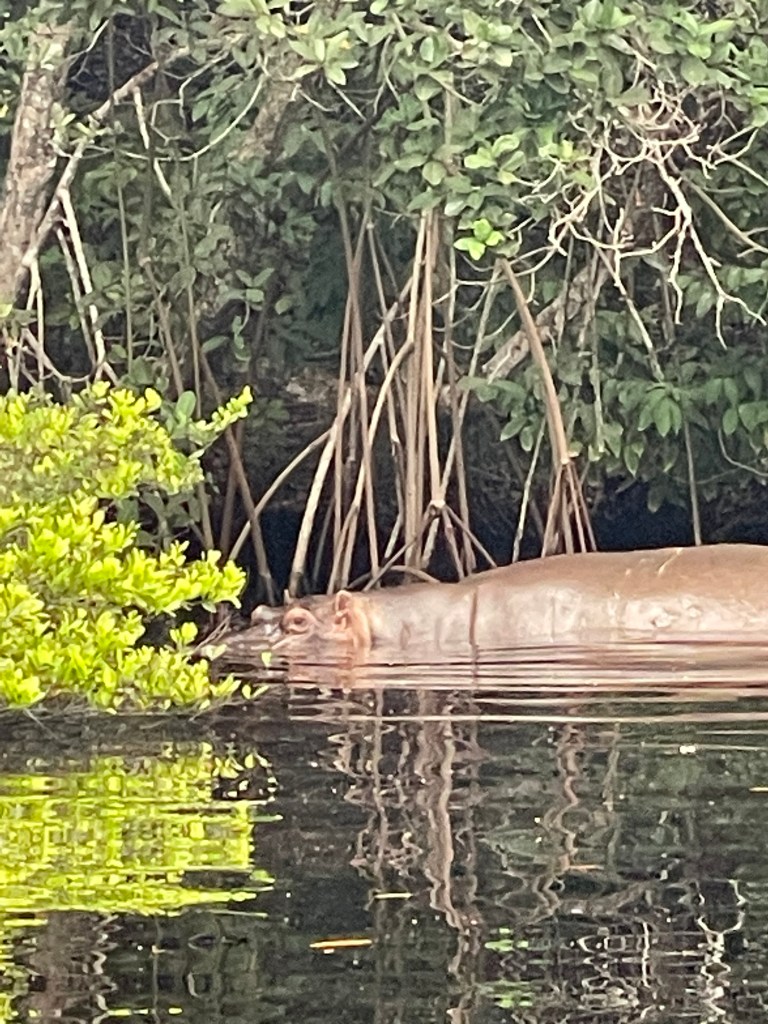
On the other hand, in Rwanda you will only see Gorillas while in Gabon at the same camp and even the same day you can also see elephants, hippos, turtles, whales, and buffalo.
Of note – neither location should be considered as a destination for the “Big 5.” While the destinations are beautiful and amazing, both are trips to see gorillas. If you want to see the “Big 5” consider more traditional locations like Tanzania, Kenya, South Africa, Zimbabwe etc…
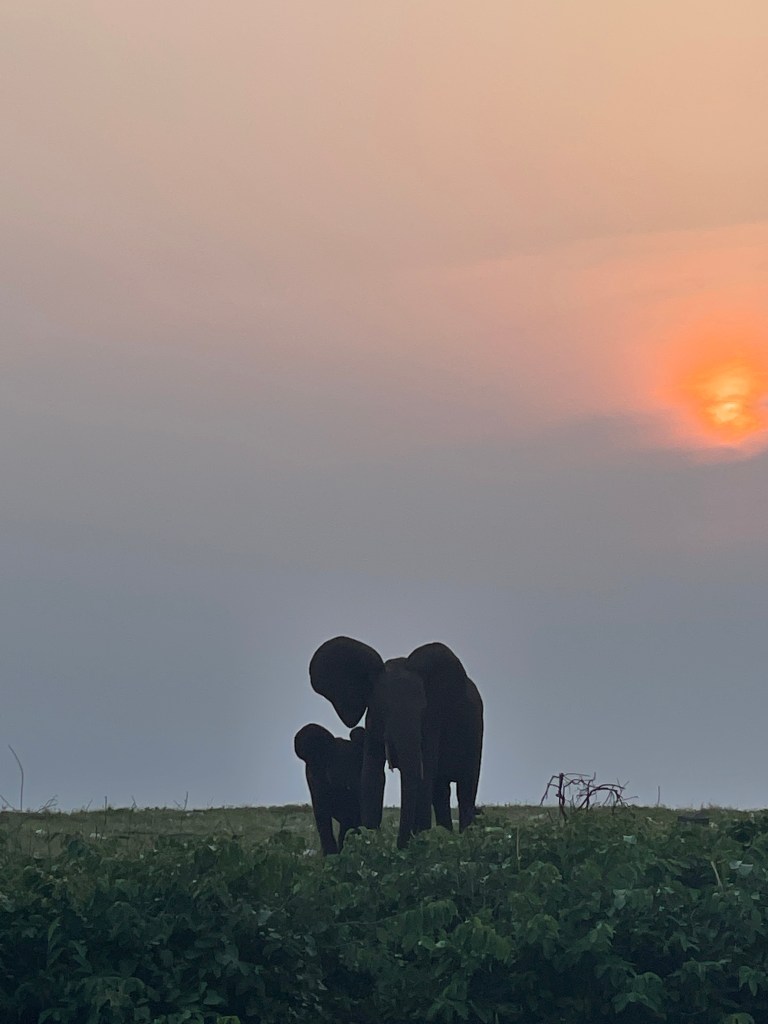
Gabon is a wonderful location for elephants and is home to 16% of African elephants.
The class of traveler to Gabon was unlike that I have met anywhere else. Everyone was exceptionally well travelled and conversations were about Madagascar, Togo, Malawi, Myanmar and Indonesia instead of Rome or Thailand.
The Basics:
As mentioned, getting to Gabon is difficult. From the East Coast of the United States it was 23 hours door to door, just to Libreville the capitol. It was another 8 hours to the camp. It is obviously longer if flying from the West Coast or Asia and shorter if flying from Europe. Also note, there are not flights every day from Paris. But there are other options from Istanbul or Addis Ababa.
Most travelers require a visa. For American’s there is an option for an e-visa. It is hit or miss if you can get it to work. I was able to figure it out in two tries. My mom never got it to work. We heard similar stories from others. Most companies offer a service to process the visa for you in country. I recommend you try yourself first but know that about two weeks out you may have to resort to paying for someone else to take care of it. There are fraudulent sites out there – the correct e-visa website is: Gabon e-Visa (dgdi.ga). While online it says the cost for a visa is 70E to be paid at the airport, I discovered it has gone up to 85E. Be prepared to pay in Euros (in cash) at the airport (and have exact change).
Gabon requires proof of yellow fever vaccination for all travelers. Expect to show it after debarking the aircraft before immigration. The entire immigration, baggage and customs process took about one hour. There is a currency exchange booth in the baggage area. Gabon, along with five other Central African countries use the Central African Franc (CFA). The CFA is tied to the Euro (through the legacy French Franc) – while this is an unfortunate legacy of colonialism that restricts the sovereignty of the affected nations, it does make the CFA stable with a steady exchange rate.
Libreville:
Both the Park Radisson and the Radisson Blu in Libreville are near the airport and are comfortable and convenient options. The two hotels are actually adjoined and many of the amenities are available for guests of both hotels. The Park Radisson is a little cheaper and the Radisson Blu has nicer common facilities. Both have comfortable and clean rooms with great showers, a wonderful breakfast and the option for an ocean view.
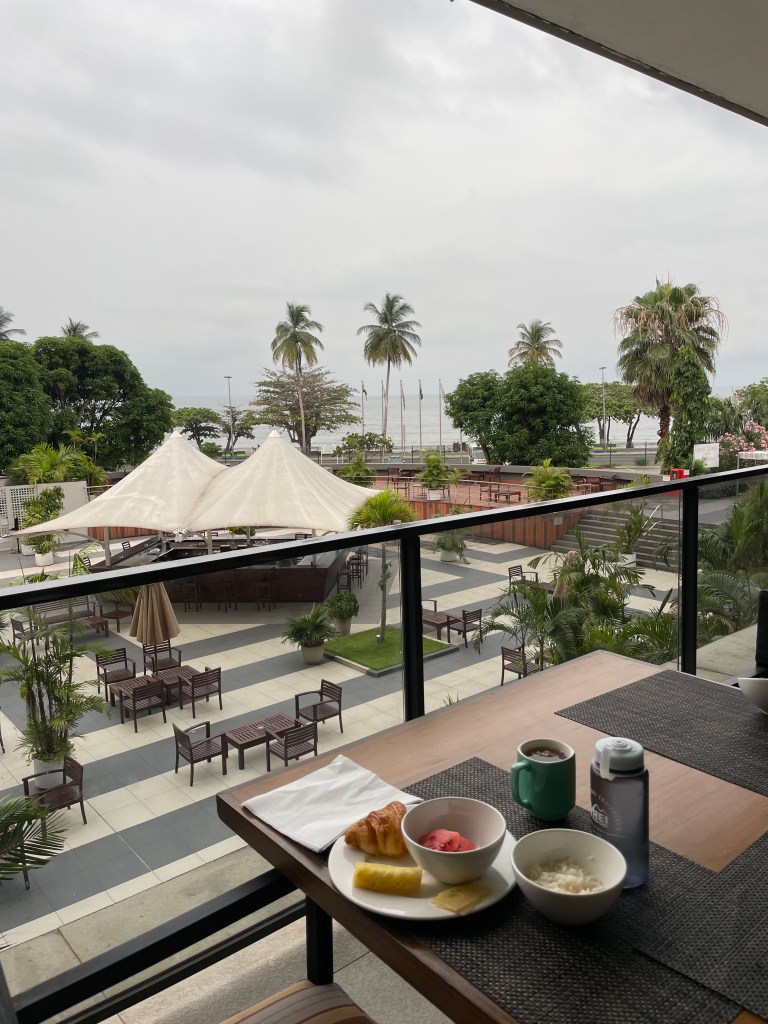

Regardless of where you choose to stay, you will need one night in Libreville upon arrival before heading out to one of the National Parks. I would also recommend a night in Libreville when you return. There is enough to see in Libreville for one day, but many choose to fly out immediately.
Getting to Loango National Park:
Gabon has several national parks. Each has a niche for different animals. We only had the opportunity and time to visit Loango for Gorillas. But if you have the funds and time, I highly recommend you also visit one of the other parks such as Lope. Gabon is also well known for its fishing and turtles.
Morning flights for Port Gentil leave at 0830 and 1030. It is a 20-minute flight. It won’t be full of Western tourists. In fact, there were only three Caucasians on the plane. It was then a 3 ½ hour truck ride over unpaved roads. I was surprised at how expensive this transfer was and even did a little research so I could push back on the company that arranged it for us. Turns out that 300-350E each way per car is the standard rate. After experiencing this journey first-hand, I am surprised it is so cheap. It is a long trip and the driver has to come back to Libreville the same day. It takes a lot of gas and must take a huge toll on the vehicles. It was then a 20-minute boat ride and other 45-minute jeep through the savannah. We left our hotel in Libreville at 8 am and arrived at camp in time for the sunset.
During the journey I thought several times about the warning signs at amusement parks – don’t ride this ride if you have back or neck problems. The same could be said about overland transportation in Gabon. It was a rough rough ride.

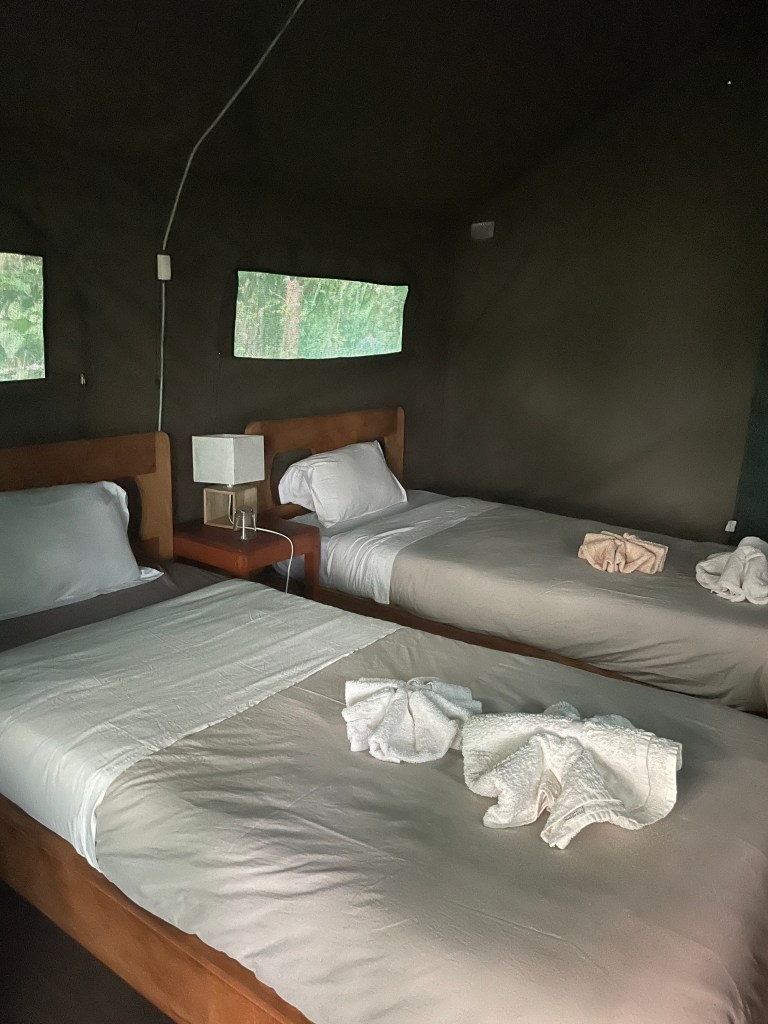
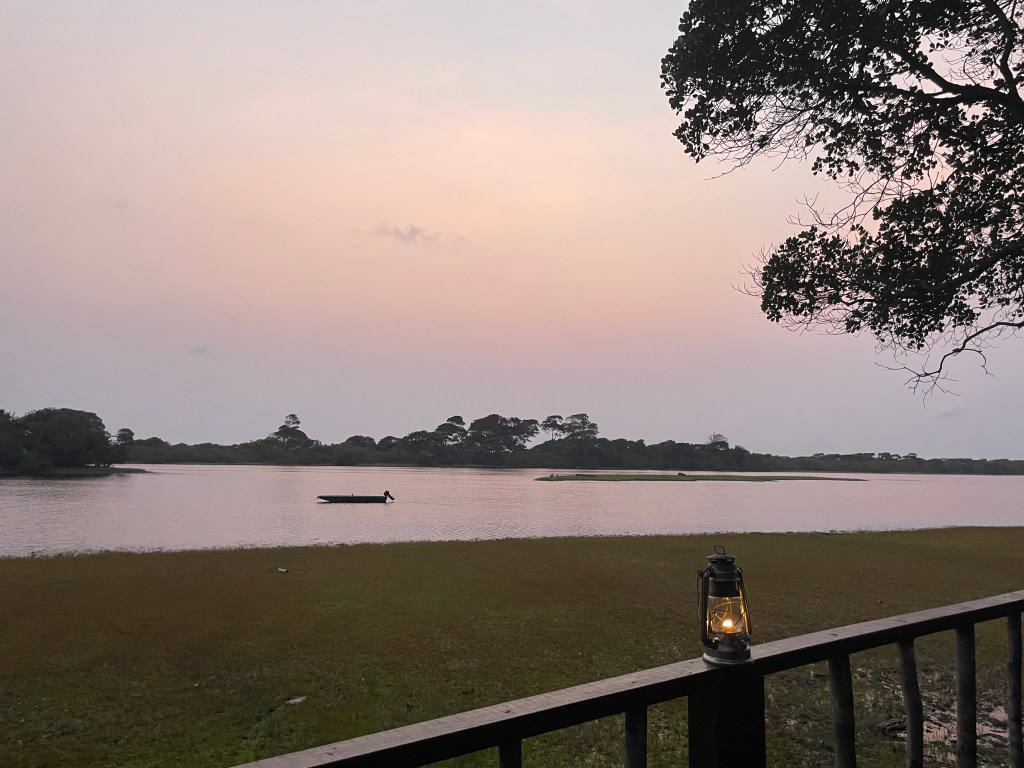
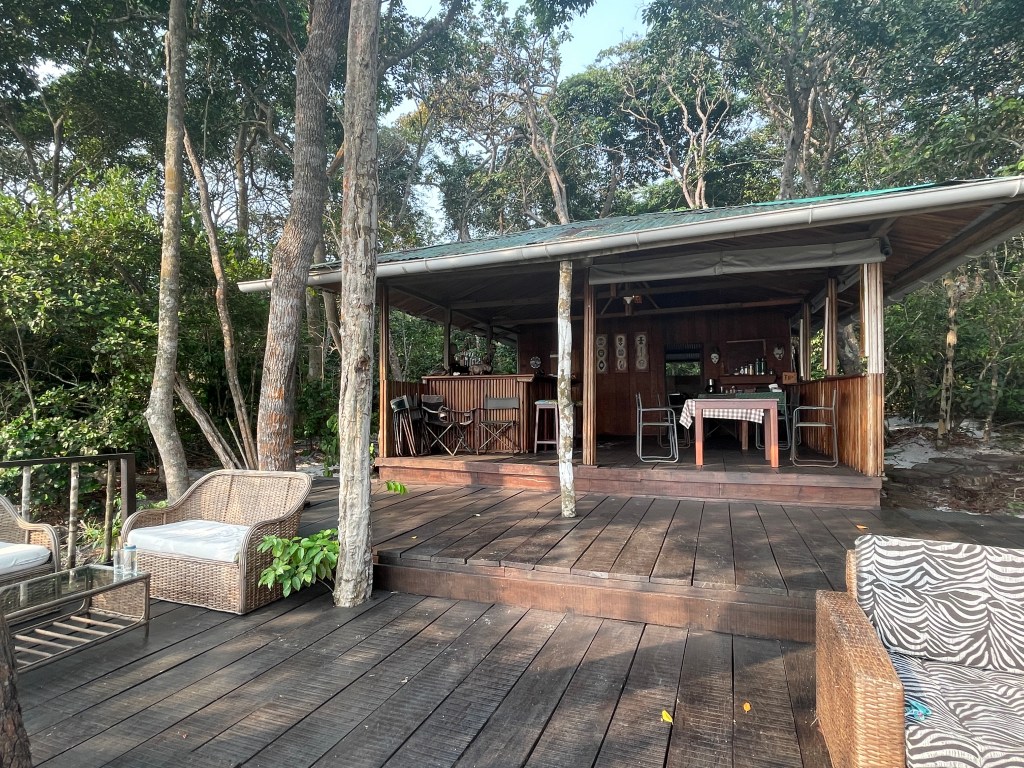
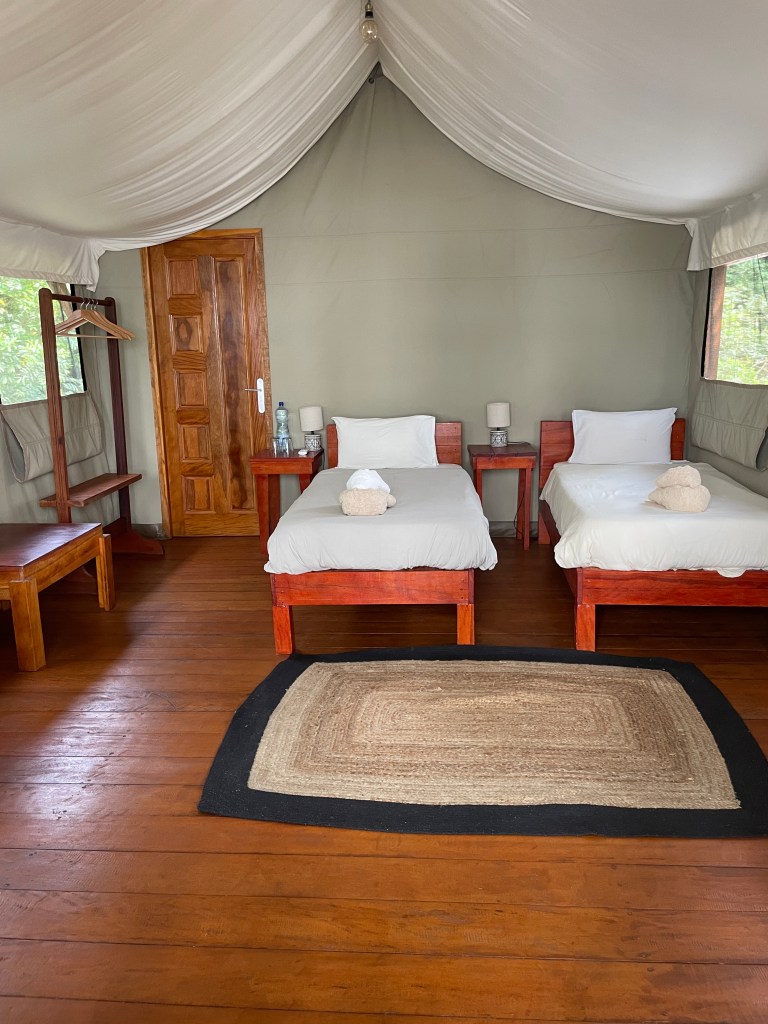
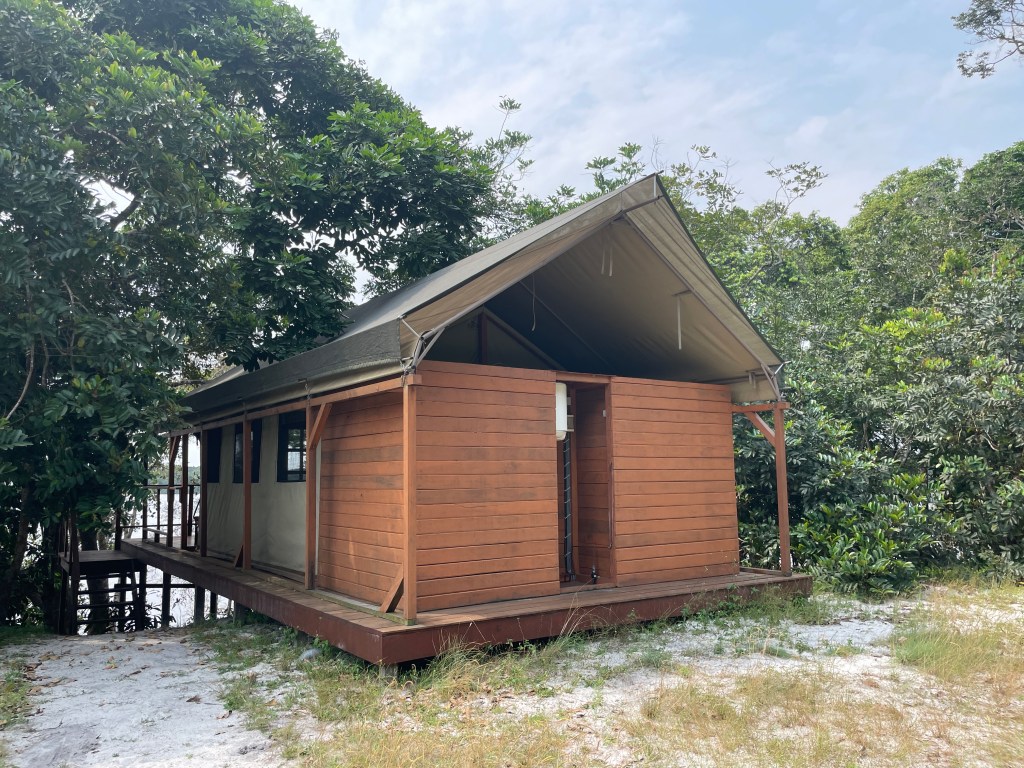
We stayed in two lodges within the park. The first was Louri Wilderness Camp for two nights. This is a remote camp on the edge of the Savannah, along the river and just a short distance from the ocean. Our tent was on the river and we could hear the ocean in the distance. There are only four “rooms” and there is no WiFi in camp. We also stayed at N’dola which is also on the river but has at least 8 tents that are also on the river, a large common area, laundry, and WiFi. Both were great and if you have the time, I recommend splitting your stay like we did. The tents in both parks had private bathrooms with showers. Both had fans. Both had hot water and electricity. It was hot at night but maybe not as bad as I expected for the equator.
Seeing Gorillas:
Getting to Yatouga research camp will take a 20–40-minute boat ride depending on where you are camped. It is a typical speed boat and a beautiful ride. You might also have a short jeep ride through the Savannah to get to the river.
Only 4 individuals can see the Gorillas a day. Your trip will be limited to one hour. At the research station you will take a COVID test and receive an informational briefing about your visit.
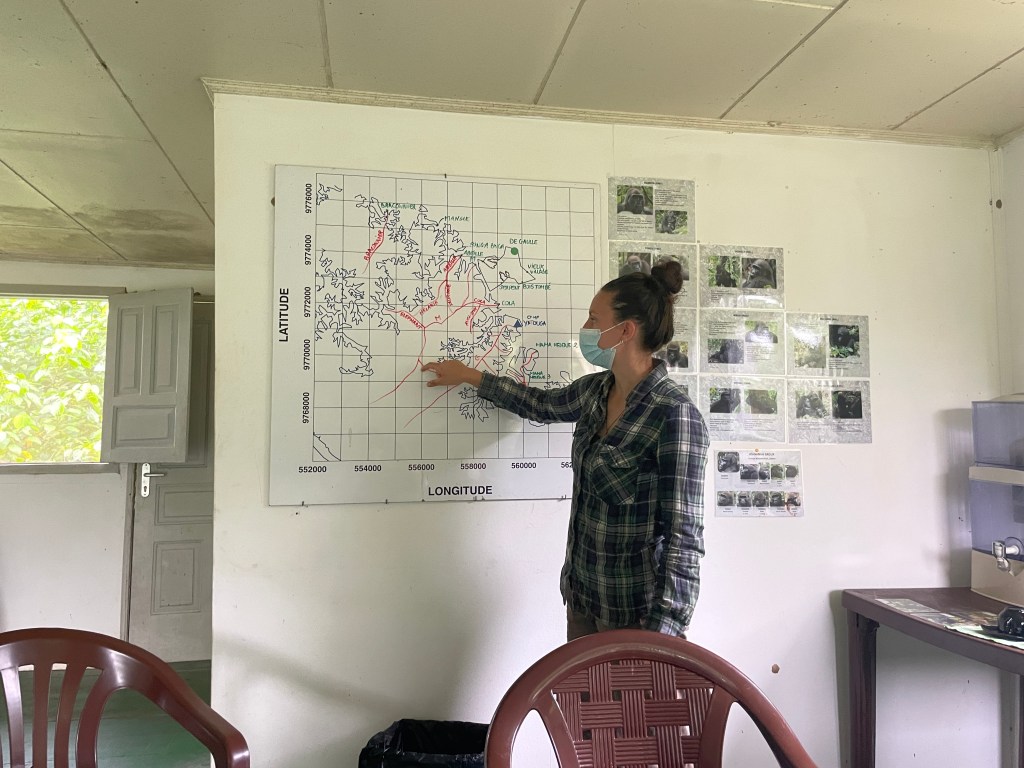
Participants over age 65 require a health authorization from their doctors but I would caution people of any age to ensure you are in good health. My group got lucky and we had an easy 20-minute walk to the gorillas. It was flat but uneven terrain. The group the day prior walked over five hours. Two hours were through a swamp. A 26-year-old male in that group described it as the hardest thing he has ever done. If you get hurt or can’t continue with the journey, not only will this affect your visit, but the visit of the other three individuals in your group.
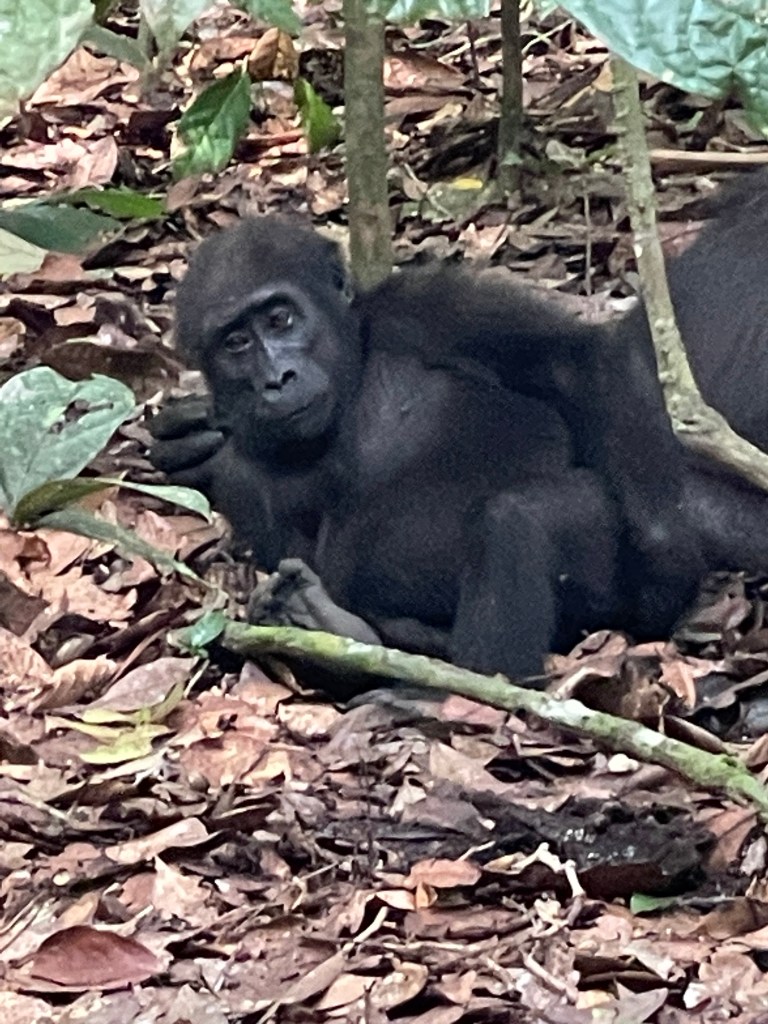
There are 8 Gorillas in this particular group. A silver back, a one-year-old, a three-year-old and several females and adolescent males. We were within 20 ft of the Gorillas and all of the photos in this post were taken with my iPhone. It was definitely worth it.
Other Activities:
Most individuals spend 2-4 nights in Loango. We spent four nights but when surveying those that we met on our trip, we all agree that 3 nights is probably about right.
The flow of the day is similar to other safaris. You are up early around 630 or 0700 for breakfast and an AM safari before it gets too hot. You are back at camp in late morning for lunch and to rest before going out again late afternoon and for the sunset. Dinner is late.
For other safaris we did two walks through the forest looking for animals on foot. We saw a python and hogs but no elephants.
We also spent two evenings at the beach. For one we traveled by boat and by jeep the other. On both trips we saw Elephants on the beach.
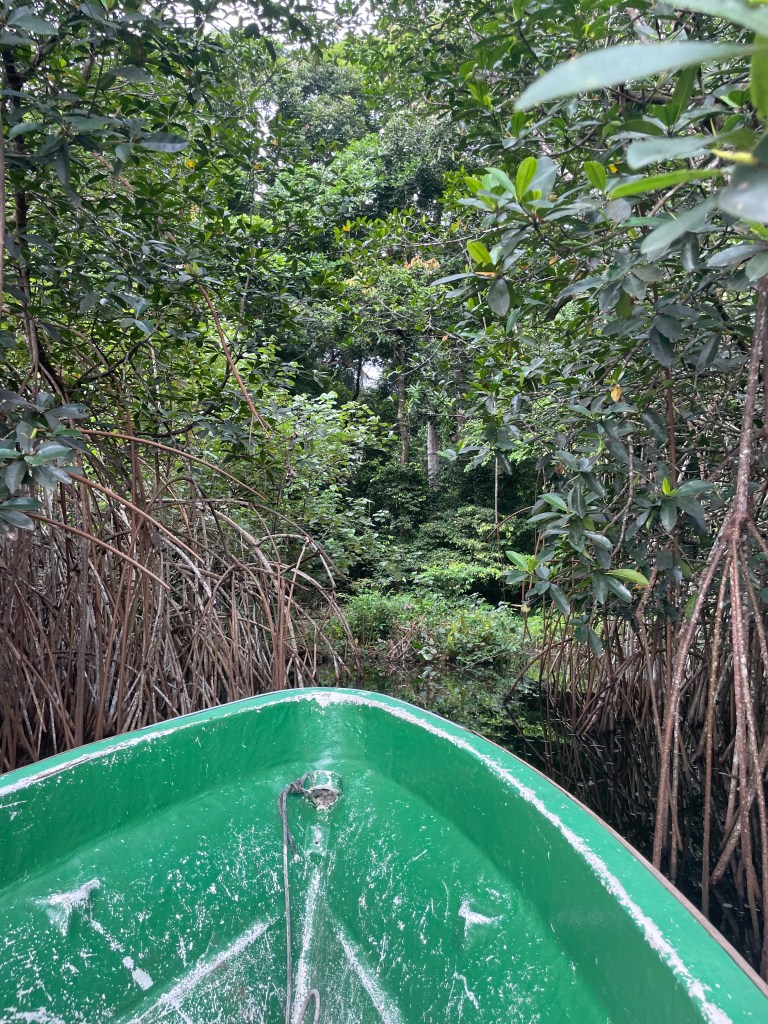
My second favorite excursion was a boat trip through the mangroves to see hippos and monkeys!
I wish I could tell you I saw surfing hippos. Gabon – Surfing Hippos – YouTube The manager of our lodge told us it is quite rare and he has only seen it a handful of times in his 10 years living in the park.
Packing:
I’d recommend a mix of pants and shorts. I liked having pants for the gorillas and wore shorts the rest of the time. Of course, you want neutral colors. You also want something clean to change into at night for dinner.
You will find conflicting information if you should wear closed toed walking shoes or a sports sandal like Tevas. Our guides and people at our lodge wore both. And everyone was happy with their choice. I mostly wore Teva’s. When walking through water, I was very happy with my choice. When finding ants, I was wishing for more protection. Bottom line – either are fine!
Of course, you will need a Euro plug for your electronics. While both lodges had electricity, it is common for the generator to be off during the day. This means you should bring a couple of spare batteries in order to help recharge. I would recommend at least 2-3 extra batteries.
I brought a hat, sunscreen and bug spray. I didn’t use any of them but would still bring them again.
If you have binoculars, bring them. But if you don’t already have them then don’t buy them, your guide will have them and share with you.
Libreville:
While the rainforest did not feel as hot as I expected, the city definitely did! From our interactions, it is a very respectful culture. Even our taxi driver who we ended up making late for a personal appointment, was still kind, did not display any road rage and walked us into our hotel instead of dropping us at the curb as many cultures (including my own) would have done. The city did not have a walkable feel, but we were able to hire a taxi for 10,000 XAF for two hours ($17 USD).
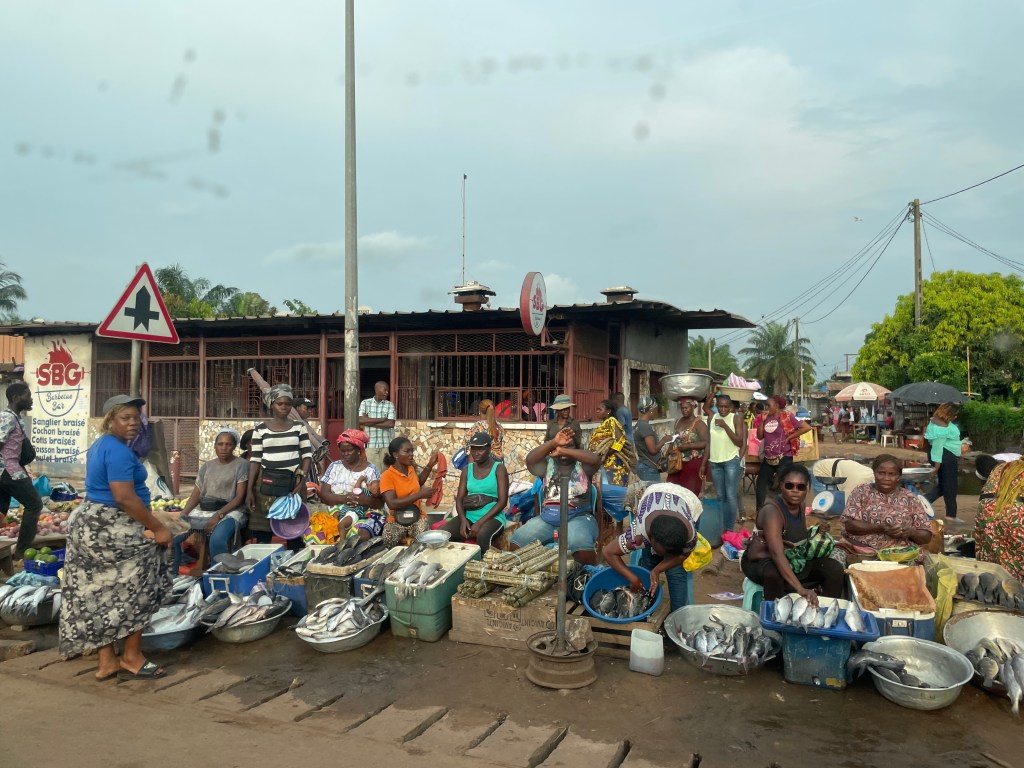
We spent one full day in Libreville and visited the market and the Musée Nationale des Arts et Traditions du Gabon. We spent about an hour in the market and it had lots of traditional crafts. Shopping was very low stress. We felt safe and there was very little pressure from the shop keepers. We were both extremely impressed by the Museum. We were there almost three hours. Our time at the market and the museum gave us a perspective of the history and the culture of Gabon outside of just the wildlife and countryside.
My mom was there an extra couple of days after I left and we almost booked her a day tour. It didn’t end up working out for other reasons but based on his responsiveness on What’sapp, I would definitely look at Tours by Nathaniel who I found from Gabon’s Eden on Facebook.
Other Resources:
I don’t have any books or movies to recommend. But National Geographic has done a wonderful piece I would recommend! Unbound: A Walk in the Park — National Geographic Traveler
For our Gorilla permits, lodging and domestic transportation, we worked with Honey at See Wild Travels. She was great – very responsive. Everything went smoothly. We also met another traveler who had also used See Wild Travels and had reservations pre-COVID that were honored several years later.
**I visited Gabon in Feb 2023. At that time, Gabon was one of the most stable and safe countries in Africa. This past summer there was a coup. As of September 2023, the U.S. State Department still lists Gabon as only a Level 1 for Travel Precautions (“exercise normal precautions”). However, I always recommend you check (and check with a variety of sources) and for all trips, and make sure you have comprehensive travel insurance.

 Life Kinetic Travel Research