
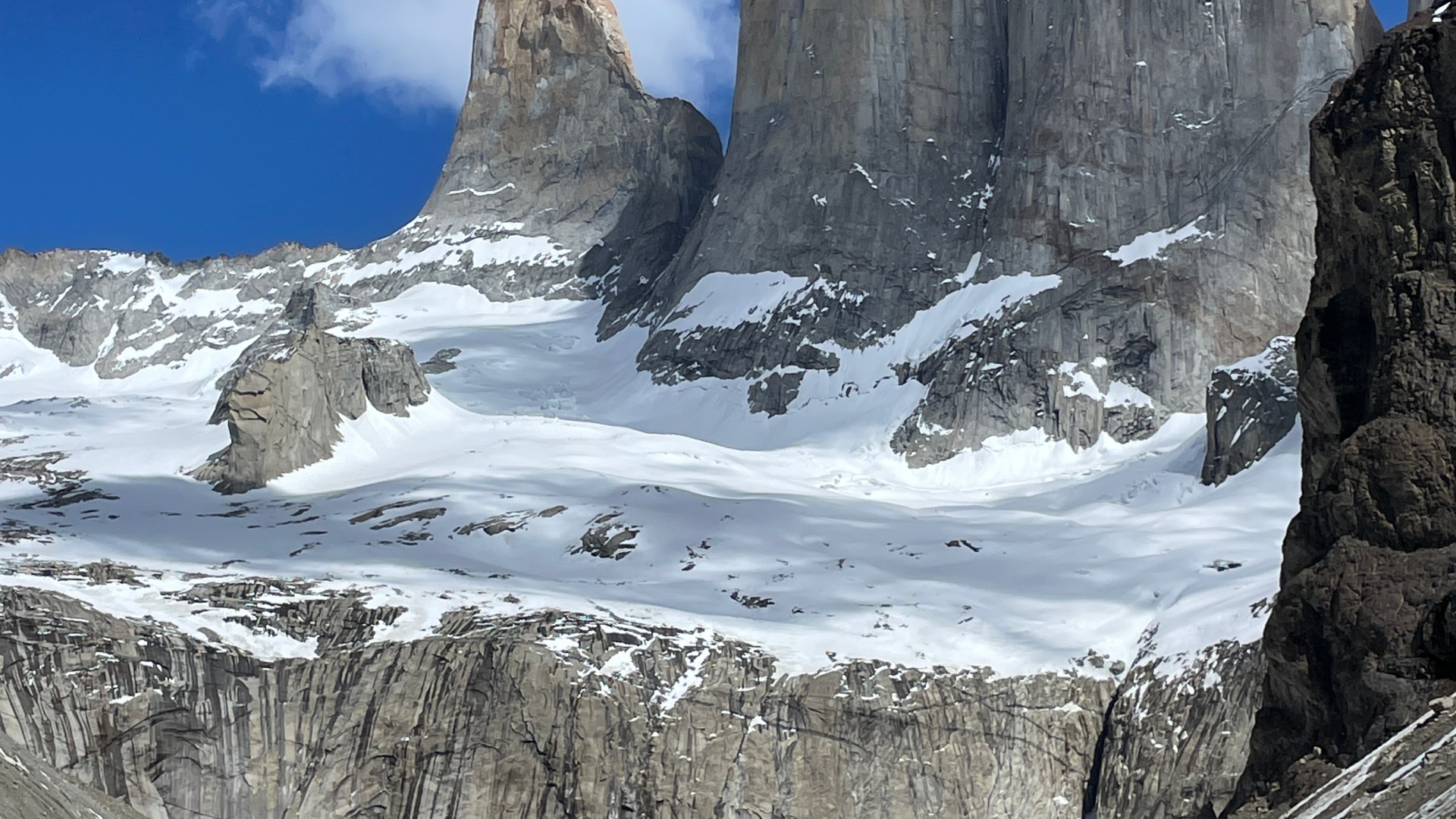
My chiropractor is taking a trip to Prague and Vienna. He asked me for any travel hacks. I didn’t stop talking for the next 30 minutes. When I went to send him a link to my blog, I was surprised to find I had never written a consolidated list of all my hacks. Instead, they were broken up into multiple themed posts. So here is a consolidated list of all those hacks, plus others I have never shared before!! Grab a cup of coffee – I have 93 of them. Some are ones that you’ve heard again and again. But there are some that I’ve never read or heard anywhere else!
Money
- Local Currency. Use the airport ATM to exchange for local currency. An airport is a secure location, and the ATM is less likely to be tampered with. Additionally, you now have money before you venture out of the airport and don’t have to worry about it. Always choose to withdraw in the local currency. Never have the ATM convert to USD (or your home currency)!
- Before leaving the airport, buy something small so you have change / smaller bills. The ATM likely gave you larger bills that aren’t useful for tipping, public transportation etc… So stop in a shop to buy a cup of coffee, a pack of gum etc…
- Buy travel insurance. For bigger trips with more upfront expenses, I always buy insurance. I just plan on it as part of the total cost (it adds about 10%). I make sure I have “cancel for any reason” and “trip interruption”. A reminder from a good friend and great traveler, buy your insurance from a 3rd party, not the airline or hotel. The only addition I would make to that, is sometimes I will add on the company’s insurance for a rental car. I still have my big insurance policy and I still have my day-to-day car insurance, but if I am somewhere where damage from the elements is likely (Iceland comes to mind) and I don’t want to get into a long dispute with a company, then I’ll sometimes add their insurance too. There is also an “art” to keeping down the cost of insurance. If booking a trip myself (which is the case 90% of the time) then I only include the large non-refundable expenses. As an example, if my hotel reservations can be cancelled with 72 hours’ notice, then I will only get enough insurance to cover 3-days (not 3 weeks). If I used frequent flyer miles, then I don’t include airfare. Over the last few years, even the trips that have gone very smoothly, I have broken even on my insurance. And for those that I lost a little money, the peace of mind was worth it.
- Book as much as possible on a single credit card. This does a few things – you have another advocate on your side if things go wrong, it can act as extra insurance, and you have a record of actual purchases and costs all in one spot. And of course, you are also earning more points for your next trip! My primary card does not have foreign transaction fees and gives points that can be used on multiple airlines, rental car companies and hotels.
- Travel Account: Over a decade ago I set up a separate travel account. This has two purposes. First, it helps me save and budget for a trip if the funds are separate and dedicated. Secondly, the account is not tied to anything else. If my travel debit card is lost, stolen or compromised while on a trip, it will be annoying and inconvenient but it won’t affect my direct deposit, my monthly bills or other necessities.
- Credit / Debit Card: I travel with two credit cards and one debit card. None have foreign transaction fees and my debit card doesn’t have an ATM fee. The two credit cards are kept in different places and are different types (American Express and Visa). I have a photo of them or the account information written down in case there is a problem.
- Cash: I keep my cash in at least two places. At the start of each day, I get out what I think I’ll need for the day and put it where I can access it easily. The rest of my cash is stored elsewhere where it won’t been seen when I am just buying a small purchase. I always have at least $100 of back up cash on me and sometimes I have an extra $100 worth of hard currency (Dollars or Euros) in case of an emergency. I usually don’t have this on me during the day. It is also worth doing some research prior to your trip in order to understand if it is a cashless or cash-based society. This has changed a bit with COVID, but as an example, Iceland has been mostly cashless for years. There is nothing you can’t do with a credit card. I even used it to pay for a porta potty. In contrast, Japan is a cash society. Credit cards are only used for large purchases in some tourist areas. People pay their rent in cash, and I paid cash for the dentist. Knowing this will obviously affect how much cash you need.
- When to bring currency with you: Nine times out of ten, I just plan to get local currency at the airport ATM. Then I head straight to a coffee shop or store in the airport to buy something and break a larger bill into change. Smaller bills are especially important if you are taking public transportation or a taxi from the airport. There are some locations or situations when you might want to have local currency before you arrive. Argentina and South Africa come to mind. But you also might consider it if you will be in a hurry when you land and know you need cash right away. On my last trip to Spain, a friend was meeting me in a small town. She had less than 2 hours to clear customs/immigration and catch a taxi to the bus station. We were concerned she may not have time to stop at an ATM and what she would do if the ATMs weren’t working. We made sure she had Euros before departing the US. You can almost always order currency through your bank.
- Bank ATMs: Once out of the airport, I almost exclusively use bank ATMs. And while this is my primary method for getting cash, I try to not stop at an ATM more than once a week or so. Each ATM transaction leaves you a little vulnerable for theft if the machine has been tampered with or for a pick pocketer who sees where you put a large amount of cash. Bank ATMs are more likely to be secure.
- Haggling: Research if haggling is normal in the local culture. But also, never haggle away someone’s livelihood. In poorer countries, the equivalent of a dollar can make a huge difference to their quality of life. Don’t haggle over pennies.
- Convivence vs Cost: Along the same lines, don’t just focus on the cost. Sometimes convivence is worth the extra expense. If you have limited time to see a location then as the old saying goes, “time is money.” If you can save 2 hours by spending an extra $10 or $20 then it might be worth it. (But on the flip side, more expensive does not always mean better quality.)
- Automatic Bill Pay: Either pay your bills before you depart or set them up for automatic payment while you are gone. This will alleviate both stress and late fees. It will also alleviate the need to get on sensitive bank websites from unsecure networks.
- Track Expenses: Decide in advance if you want to track expenses. This can be helpful to make sure you are staying on budget and not going crazy. It can also help in order to budget for future trips. I always underestimate the amount of money I’ll spend on food and often forget to account for tips in my planning. I realized both after I began tracking my expenses. I use the splitwise app for tracking expenses regardless of if I am alone or with a group.
- Save Currency: If currency can be used elsewhere (Euro) or I think I’ll be back (Singapore, Japan or Korea) when I get home, I put my left-over currency in an envelope, label it and put it with my travel stuff. If I think it is likely the currency will change before I return or I have such a small amount that inflation will make it unusable, I leave it as a tip or to someone on the street before departing.
- Third Party Sites. These are great to compare options. But before using a site to book a hotel, always check the hotel’s website. Their prices are often better or they offer other perks for booking with them directly. Recently, I found I was eligible for a 50% discount using the hotels official website. But if the hotel’s website offers the same price, then I prefer to use booking.com in order to keep all of my reservations in the same place. NEVER use a 3rd party site for airline reservations. Always use the airline!!
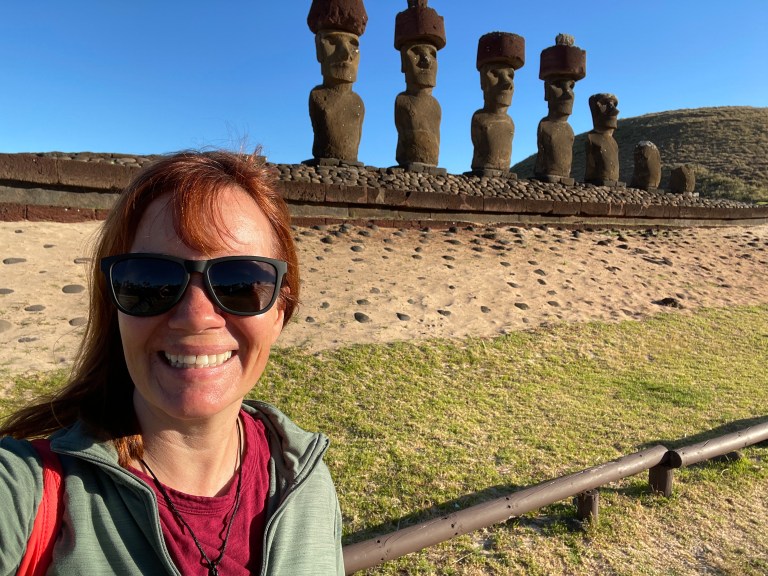
- VPN for booking flights. You will sometimes find there is a benefit to booking flights from the country of origin as prices are higher from the US. Using VPN can help save considerable cost. When buying tickets to Easter Island, flights bought in the US were $600-$900 more than if bought in Chile. I was so thankful for VPN. Incidentally, sometimes the opposite is true and flights are more expensive for a local. Flights bought in the Dominican Republic are more than the same flight bought in the US. You can also research your trips and airfare “incognito” on google.
- Be ready to take advantage of deals. This requires either being really organized or really spontaneous. On the organized side, knowing where you want to go and when means you can take advantage of a good deal when it comes up. They rarely last long. Of course, if you are spontaneous then just buy when you see something appealing.
- Keep up on flight prices so know a good deal. Along the same train of thought, do your research so you know what is a good deal when you see it.
- Book flights after a storm or significant event. I hesitate to write this because there is a very fine line. You don’t want to visit a location that is experiencing extreme difficulty and take valuable resources away from the community. But some events are fairly temporary but will still drive down prices. As an example, a few years ago, my cousin and I were planning a trip to New Orleans. She hadn’t bought her tickets yet, and several months before our trip, they had a large storm. It didn’t do a significant amount of damage, but for several days afterwards, flight prices were a fraction of the cost.
Transportation
20. Free flights. Use credit card offers to get airline miles and free flights. Once to twice a year I sign up for a new credit card in order to get the sign on bonus. For most of these offers (but not all) you will need to spend a defined amount of money in 1-3 months. Some also have an annual fee. For a large majority of the cards, you are required to spend $4000 within 3 months and pay a $99 fee. I use the card for purchases I would have made anyway, pay it off immediately, use the miles for my next trip and then cancel the card within a year. I always make a note on my calendar to make sure I cancel the card and don’t accidently pay the fee again. This basically means I got my flight for $99. Also make sure to keep track of your cards. Most only let you get the sign on bonus once every three to five years. People are often worried about what this will do to your credit rating. I’ve found I take a very short term (1-3 months) 20-point hit. Don’t do this before making a big purchase like a car or a home but otherwise I think you gain much more than you lose.
21. Pre-book Airport Transfer. If you are nervous, or arriving late at night, arrange transportation from the airport to your hotel. It might be a little bit more expensive, but the peace of mind is worth it.
22. For important events or complicated trips, plan a buffer day. For an important or complicated trip, plan 1-2 buffer days. When going to South Africa, we were a group of 5 coming from 4 different origins and most only had 1 flight a day. I booked two nights in Johannesburg to make sure everyone arrived before we started our safari. And as a bonus, we all had a great time exploring the city!
23. Back Up Frequent Flier Miles – I have not done this yet, but thought it was a brilliant idea when I heard it. If your timing is critical, use your frequent flier miles to book a backup flight on another airline a few hours after your paid flight. This means you have a second option if your flight is significantly delayed or canceled. And because frequent flier flights can be canceled right up until departure, you aren’t out anything if your primary flight works out.
24. Fly in the morning. The first flight of the day is the most reliable. The airlines have most likely adjusted from any weather, crew and maintenance delays the day prior. Later in the day you are subject to domino effects of delays in other cities or other planes. As a side benefit, this also allows you to maximize time at your destination.
25. Layovers. Make sure you have enough time for your layover, especially if transferring to a location that does not have frequent flights. Again, just plan it into the calculus. When traveling to South Africa, there was only one flight a day from New York. But there are dozens of daily flights from DC to New York. I planned an extra several hours at the New York airport with the plan to have dinner there. I am not disputing that airport meals are expensive. But the extra 3 hours and $20 was worth the peace of mind to get a multi-week trip off on the right foot.
26. Hotel Loyalty Points. When traveling, I try to stay in smaller locally owned cute places with character. And I save my Marriott and Hyatt points to use when delayed. The apps and airport locations make it easy to book at the last minute. And because the nights are “free” I don’t feel like I am out a ton of money.
27. Long Flights. Hacks for handling a long flight can be found here. Tips for Handling a Long Flight – Life Kinetic Travel Research Additionally, tips for overcoming jet lag can be found here. Tips for Overcoming Jet Lag – Life Kinetic Travel Research
28. Long Layover. If possible, consider a long layover in order to gain a bonus location. There are even some airlines that offer a long layover in their hub city – Iceland, Portugal and Turkey all come to mind.
29. Consider another airport. Consider a nearby airport for your departure or arrival. As an example, if flying to Europe, find the cheapest arrival airport and then plan to take a budget airline or a train to your final destination. Likewise, consider another departure airport. As an example, while I live in DC and have three great airports within an hour of my house, but New York City often has even better fares. I can buy a separate ticket to NYC or take the train and then fly from there.
Safety
30. Whistle. I am lucky that I’ve never really had an issue when traveling. One of my go-to safety tips is when you are uncomfortable or want an extra assurance, wear a whistle around you neck (it will do you no good in a purse or bag). If just a little nervous I pull it out from under my clothes or coat and hold it up. If concerned about a particular person, I make sure they see me do this. I also have a whistle for hiking and outdoor activities.
31. Uber / Grab. I put this in safety and not transportation for a few reasons: 1) You don’t have to have any cash on you and a price is set so you are less likely to get ripped off. 2) You don’t need to know how to get to your destination and your route can be tracked by friends or family. 3) You can book it ahead of time. This is especially nice if you know you will be traveling at night or from an iffy location.
32. Men – Front Pocket Wallet: For men, put your wallet in your front pocket instead of back pocket. Also put a rubber band around it to increase friction and make it harder to slide out.
33. Women – Cross Body Bag: I am a huge fan of a cross-body bag for keeping my valuables safe. It never leaves my body while out and about. Not when I am eating and not when I go to the bathroom. It is where I keep my credit cards, cash, passport, and phone (I also keep a little toilet paper in it as well). It needs to have two sections so I can separate my cash and cards. The majority goes to the safer section with my passport. And what I am going to use that day goes in the more assessable section with my phone. If I want to have more things with me (book, umbrella, layers, water bottle) I carry a second day pack or tote bag. If this is lost or stolen there is nothing of value in it and it is a decoy for thieves. I don’t have a brand I recommend. I’ve used several over the years. Right now, I have a Tumi but that is only because the no-brand bag I used for years broke at the airport on my way to Belize. I had to get a replacement at the airport.
34. Medical Kit. Depending on the type of trip you are taking, you may want to consider packing a medical kit. Here are some ideas based on what I pack. Travel (and hiking) “Medical Kit” – Life Kinetic Travel Research.
35. Don’t drink the water. Before your trip, research if the local water is potable. If it isn’t, then don’t drink the water. This means don’t drink the water! Don’t use it to brush your teeth. Don’t use ice. Don’t use it to mix flavored drinks. So, what do you do instead? Buying bottled water is always an option. But frankly this gets expensive and it bad for the environment. If you have to purchase bottled water, then opt for a big bottle (less plastic / more water) or then reuse that bottle later. However, there are better solutions out there. Because of the environmental concerns of plastic, many hotels now offer water stations to refill your bottle. I always travel with a reusable bottle. I was recently surprised to find that every hotel I stayed in Laos, Vietnam and Cambodia offered a water station. Now sometimes it was only offered at breakfast so I had to think ahead and fill up for the day (multiple bottles) but it was worth it. Most rooms or hostels also have a kettle. Boiling water is always a safe option. I especially do this for water to brush my teeth. I boil water in the morning to have at night and then boil water at night to have in the morning (give it a chance to cool). You can also bring your own filter or iodine. I love my Steripen and use it for both hiking and traveling. But bring your own bottle so you have a wide enough top to use the pen. A water bottle with a lifestraw or its own filter are also wonderful options.
36. Make sure hot food is hot and cold food is cold. This is hopefully self-explanatory.
37. Only eat uncooked fruits and vegetables that you can peel. I rarely eat salad or raw vegetables. For fruit I stick to bananas, citrus, melons, pineapple instead of apples or berries.
38. Be careful of street food. Street food is fantastic. It is a great way to “go local” and will be much more affordable (and quicker) than a restaurant. Just make sure it is freshly cooked and has not been sitting out in the sun or bugs. And go to the stand with a line of locals. There is a reason one might have no line!
39. STEP Program. For American citizens, register in the Department of State STEP program. In case of an emergency (pandemic, war, volcanic eruption) it lets them know who is in the country. For other countries, see if there is something similar.
40. Give someone you itinerary. Make sure a friend or family member(s) has a copy of your itinerary and have a plan to periodically check in. Additionally, have that one resourceful person you can contact if things get iffy. (This person should rarely be your mother or spouse! There is no reason to make them worry)
41. Plan B. Have a plan B if you and your traveling companions split up. As an example, if we lose each other at the Grand Bazaar, we will meet back at the hotel by 5 pm.

Electronic Devices.
42. Download maps before your trip. Maps.me is my favorite and can be used without internet. You need to download the maps ahead of time when you have a good signal but then can use it at any time. You can plan where you want to go with several colored pins if you want to organize by sights, food, hotel etc…. You can also sort by folder for easy reference later “What was that place where we ate at by the thing???” Just go back and look it up!
43. Download translation app. Download a translation app that you can use offline if needed.
44. Protect Your Electronic Devices. Protect your electronic devices at airports, hotels, rental vehicles and when using any USB-ports at public places; most are equipped with software that extracts the data from your device while charging it. Use a Data Blocker (easy to buy somewhere like Amazon) to charge your devices in public locations; it prevents data extraction while powering up your device. As an alternative, you can also use a portable charger to charge your phone and devices.
45. Bluetooth and Airplane Mode. To help protect your date, disable Bluetooth when not in use and keep your phone on Airplane Mode.
46. Internet Based Communication. You don’t want to pay for or rely on cell service. Instead use a WiFi enabled platform for local communication and communication with loved ones back home. WhatsApp is common in most countries but there are several others as well.
Luggage and Packing
47. Carry On. Two thoughts here. 1) If possible, only have a carry-on for your trip. This allows you to be more mobile while at your destination, but also more flexible when traveling. Most importantly it means you aren’t stuck waiting for a lost bag at your destination. 2) If this isn’t doable, have 24-hours’ worth of essentials in your carry on.
48. Make sure you can carry your own bag. On a trip you should always be prepared for stairs, cobble stones and even just curbs. Make sure you can carry your bag for at least short distances. This is one of the reasons I prefer to use a backpack to a suitcase.
49. Bring an extra tote bag. If able to travel with a carry-on, but worried about having room for gifts and souvenirs on the way home, you can pack an extra tote or backpack (flexible with no frame). You can then check your carry-on on your return flight home and bring the extra bag onboard your flight.
50. Layers. The best way to fit into a small bag is to think about layers. If you just bring enough t-shirts and underwear (the bottom layer that touches the skin) for every day, all of your outer layers can be worn several days in a row. Also socks and pants can last 2-3 days. Even for hot weather, I have a couple of go-to dresses and skirts that only need me to change out my tank top or t-shirt.
51. Don’t wear anything you haven’t worn in a while or at least tried on. This is especially important with shoes!!
52. Don’t bring things “just in case”. Think through each day and what you will need. But also know yourself. I am always cold, so a “just in case” sweatshirt is always a good idea for me.
53. Packing Cubes. I don’t think they are appropriate for every trip, but they definitely have a place and can help you stay organized. I think this is especially true if you are moving around a lot. Learn more here on my thoughts about packing cubes. Thoughts on Packing Cubes – Life Kinetic Travel Research
54. Toiletries. Keep a separate traveling toiletries bag that is always packed and ready to go. This will help prevent forgetting something and it makes it quicker to pack. For things that you don’t have duplicates of or can’t pack ahead of time, attach a note to the outside of the bag to identify what is missing (medicine, glasses etc…)
55. Plastic Flip Flops. I never travel without them. I use them as slippers, shower shoes and beach shoes. They are perfect after a long day of walking and hiking when my feet hurt. In a warmer location, they are perfect for being out in the pouring rain.
56. Gym Clothes. Unless it is an active trip, you only need one pair of workout clothes for the gym. Even with an hour workout every day, you will only wear them 7 hours over the course of a week. They will dry out during the day, and nobody will really notice if you don’t smell fresh while running on the treadmill.
57. Things to dress up an outfit: Scarf, Black pants, Statement necklace, Shoes (ballet flats are easy to pack), and a simple black dress and flats is a classic for a reason.
58. More ideas. More ideas about the art of packing can be found here. The Art of Packing – Life o Life Kinetic Travel Research
Research:
59. Do some research. Even the most spontaneous person should do some basic research. As an example, if there is something you particularly want to see, make sure you know what days/times it is open. Link
60. No Cruise Ships. If visiting a cruise port, you can look up the cruise ship schedule and arrange your trip around their schedule. It will make a huge difference to how crowded the town is.
61. Visas and Immunizations. Always make sure you know what the visa and immunization requirements are. If you can, get a visa in advance, it will save you time and hassle after a long flight.
62. For information about how to research your own trip, check out this post at Getting Started…Researching a Trip – Life Kinetic Travel Research and Planning a Trip – Beginners Guide – Life Kinetic Travel Research.
63. Go Local. For some ideas on how to “go local” and experience a destination off the tourist path, checkout this post at Go local…. – Life Kinetic Travel Research
64. Currency Conversion: Download a currency converter before you depart. But I also like to go old school and write out some round conversions on a note card. While this is less exact, I find this useful if I am in a crowded location and don’t want to pull out my phone, if I need to make a quick decision and just need a general round number.
65. Tipping: Research the tipping culture of your destination before traveling. And make sure to take tips into consideration for your budget before you leave. In the situation like a pre-booked tour, I will often bring envelops with me and put the tip in ahead of time, so I have it ready and I don’t have to do math on the spot. I leave it unsealed so I can add (or subtract) based on the service / quality. When planning your budget don’t forget to think about sub-tips. If you have a tour, is there a guide and a driver? In Japan they don’t tip at all and in South Africa it is very much a part of the culture.
Other Hacks:
66. Bucket list stops: If it is important to you, schedule it early in the trip and early in the day. Scheduling it early in the trip allows you time to adjust in the event of inclement weather or unforeseen circumstances. However, do not schedule it for day 1 in case your flight is delayed. Also, almost all sights tend to be less busy first thing in the morning.
67. City Tours: If planning to do a walking tour or a city tour, do it your first day. Then when on your own you will know the history, have a better idea on the layout of the city and have extra recommendations from your guide.
68. Free Walking Tour: I love free walking tours. They give you a great perspective of the city and often they are better than a more formal tour. Someone working for tips is more motivated than someone who has already been paid.
69. One last look around the room. After you pack everything and it is out of the room or on your person, do one last check. The important point is after everything is out of the room. Or else it is very common to think, well of course I’ll grab my glasses off the bed… but often you forget.
70. Mobile Global Passport. For U.S. citizens or residents, download the Mobile Global Passport app to expedite your immigration when you return to the US. Mobile Global Passport is a free app that allows you to pass through US immigration exponentially faster. I don’t understand why more people don’t use it and frankly I am hesitant to recommend it because it might make the line longer! Download the app before you go and upload your information. When you land, input your flight information. You can then enter the expedited immigration line at several US major airports. This is especially useful if you are transferring (and don’t have checked luggage) because it gets you ahead of the pack and into the TSA line much faster.
71. Know your travel style. Know Your Travel Style – Life Kinetic Travel Research
72. Life Kinetic’s “Rules” for Travel. 25 Life Kinetic Travel Rules – 250th post – Life Kinetic Travel Research
73. Souvenirs. I am a minimalist and one of my favorite souvenirs is a post card. I keep a large envelop full of them and pick one at random to use as a bookmark. It is always a fun reminder of a destination!
74. The 10-day week or 5-day weekend. Maximize your paid time off by combining it with weekends and holidays. 5 days of paid leave can become a 10-day trip when combined on either end with a weekend and a holiday. For Americans, you can get even more when there are multiple holidays close together like Juneteenth and 4th of July or Veteran’s Day and Thanksgiving.
75. Jet Lag: If you travel on a red eye or have jet lag, spend your first day outside and active. This will help you adjust to the time zone and the activity will help keep you awake. Don’t take a nap and then try to stay up as late as possible.
76. Things that are worth the money: Insurance; staying where you want to be instead of an hour away; doing what’s important to you; direct flight; and comfortable shoes
77. Talk to people. Talk to people you encounter like your cab driver, in the hotel, at a restaurant, in line… Even just a simple, “how long have you worked here” can open up new opportunities and information.
78. Look for opportunities. Sometimes opportunities will just present themselves. Be prepared to take advantage of these. When in Nepal, I started talking to an elderly man while I was looking at the Peacock Window. He then offered to show us his collection of books and art. It ended up being a fun excursion and memory. (Of course, always follow your gut and be safe).
79. Problem Solving. If faced with a problem and not getting good help with direct questions, rephrase with an open-ended question like, “what would you do if you were me?” It may get you a better result.
80. Museum Highlights. If visiting a museum but you aren’t sure what to see, visit the gift shop and look at the books, posters and post cards in order to see what is most “famous” and “important.”
81. Peak Season. Know when “peak season” is and then either travel then or don’t. But knowing will help manage expectations.
82. Enhancing Memories. A few years ago, I started doing post trip superlatives and ABCs for each trip. Superlatives may be Favorite Hotel, Favorite Meal, Best Activity etc… And either alone or with my traveling companions I pick something from the trip to go with each letter of the alphabet. Both of these help remember the trip while it is fresh in my mind, is a fun activity, and provides a keepsake from the trip.
83. Before your trip. Read a book or see a movie set in the location of your destination before a trip. It will help you get into the groove before you depart and even if it is fiction, you will get a feel for the culture, history and environment. And as one of my favorite authors, Gretchen Rubin, likes to say, “the more you know the more you notice.”
84. Plan a Trip that reinforces your life goals. As an example, I am always trying to be healthier and a big part of that is exercise. For the past several years, at least once a year I have planned an “active trip.” This might be hiking, walking or this year a friend and I are biking the C&O canal from Pennsylvania to Washington DC. Knowing these trips are coming up keeps me motivated to get to the gym the rest of the year. Another example could be learning a language. If you are trying to learn another language, then plan a trip to a location that speaks that language as an extra motivator.
85. Give each trip a “signature.” This hack is also inspired by Gretchen Rubin – the idea is to give each trip its own play list, theme song, sent or other distinguishing trigger. This will help the trip live on in your memory and as an example, every time you hear THAT song, the trip and its memories will come flooding back.
Blatantly obvious hacks:
86. Refillable Water bottle: Bring a refillable water bottle to the airport. Take it through security empty and then fill it up in the airport through the trip. This will ensure you stay hydrated on the plane, ensure you have water through the trip, help save from wasting disposable plastic, keep you safe from local water (you control the sterilization) and will save you a few dollars.
87. Limit Alcohol while flying: Alcohol is dehydrating. Limit your intake before and during a flight to help with hydration and jet lag.
88. Snack(s): Always have a small snack with you to prevent you (and others) from getting hangry and to help prevent spending an outrageous amount of money on a fattening snack that you don’t even want. Also, bring snacks on the plane. It will help from eating the extra salt and calories from an airplane meal. Better yet, use this as an opportunity for a short fast to help your system rest and start fresh on the new time zone.
89. Layers: Layers will help you pack light and be prepared for any weather. Also ensuring all of your clothes can be matched will provide you more often. Also, bring a scarf and a hat. A scarf can also be used as a blanket, sarong, cover-up, to cover your head or shoulders in a conservative country… A hat is a small item that will make a big difference when the temperature drops.
90. Shoes: Make sure you can walk in any shoes you bring with you. Enough said.
91. Clothes: Make sure clothes fit. Don’t bring anything that you don’t wear regularly.
92. Small Plane Bag: Bring a small bag of needed items for the plane. When boarding keep this inside your larger carry item or personal item but once at your seat, quickly pull it out and place it under the seat in front of you. This will save you leg room. It will also save you from having to get in and out of the overhead bin during flight. Examples of what to keep in here are: phone / ipad, cord, book, medicine, neck pillow, water, snack, and an extra layer. It will also help you from being one of those annoying people that slows down the boarding process by fishing items out of their carry-on bag.
93. Most importantly of all – Make the best of things. Be flexible. And enjoy every minute.

 Life Kinetic Travel Research